 Guestbook
 History
Ports evolve. So do we.
For 50 years, HPC has been part of an industry shaped by change, collaboration, and the ambition to develop practical solutions to complex challenges.
This anniversary is therefore not only an opportunity to look back at the history of HPC, but also at the shared experiences, partnerships, and developments that have shaped the world of ports, terminals, and logistics.
We would be delighted if you marked this occasion by leaving a message in our guestbook — a memory, a thought, a wish, or a few personal words.
Our historical timeline invites you to explore the milestones, projects, and moments that have shaped both HPC and the industry over the past five decades.
Thank you for helping shape this journey.
We look forward to your message!

Capt. Bernd Franck


Gunter Klatt | Former HPC CEO

Dierk Reumann | Former HPC CEO

Dr. Michael Oesterreich

Md. Hafizur Rahman, Managing Director | KS Consultants Ltd., Dhaka, Bangladesh

Miguel Johnson | compacer GmbH
Capt. Bernd Franck


Gunter Klatt | Former HPC CEO
Dierk Reumann | Former HPC CEO
Dr. Michael Oesterreich
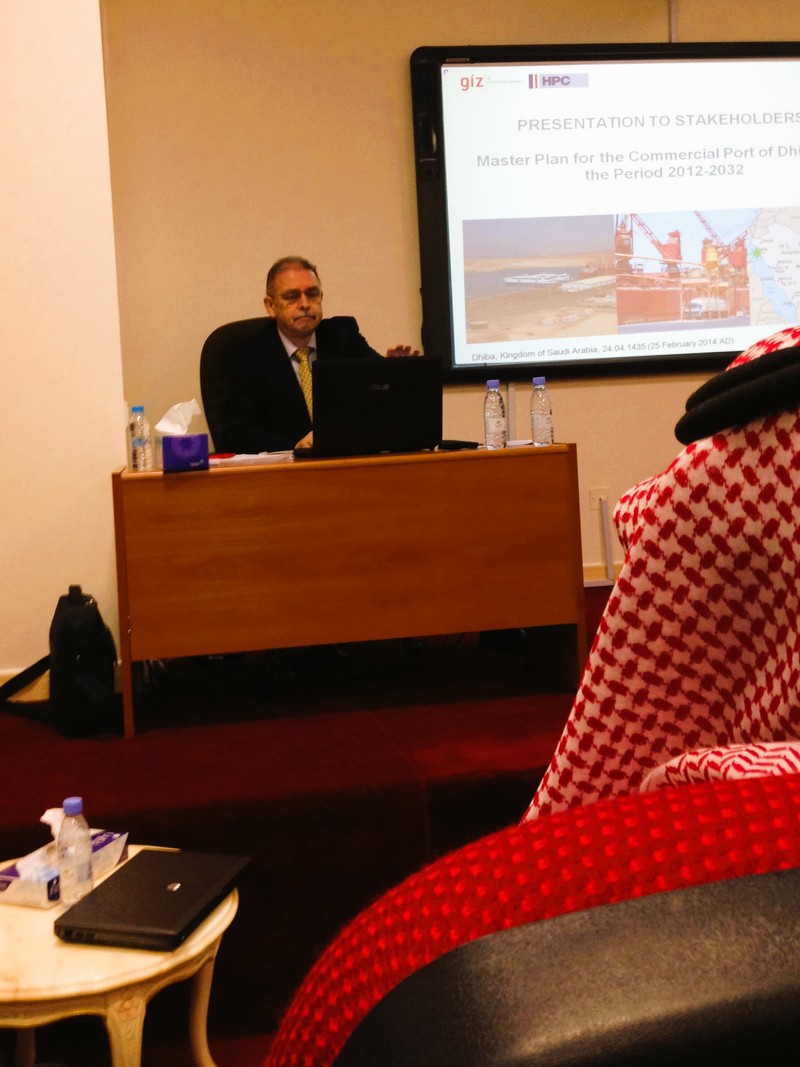
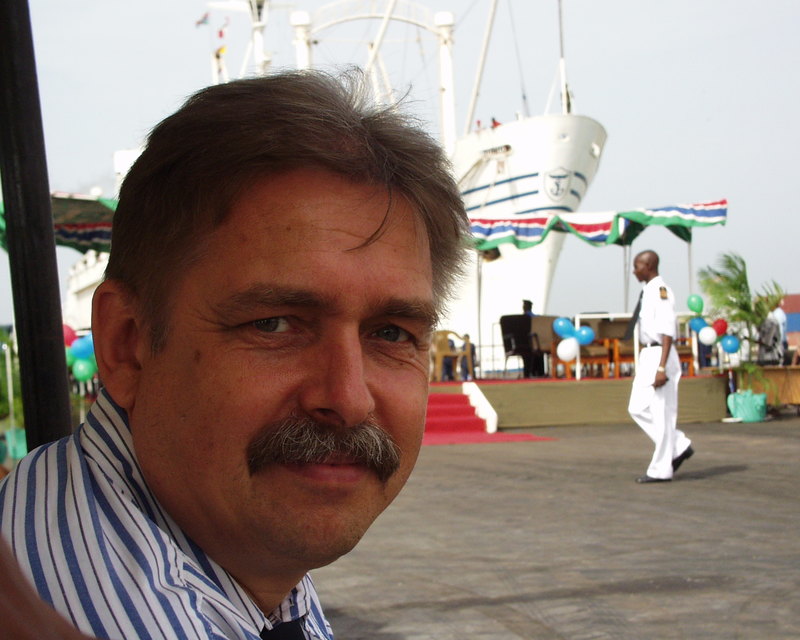
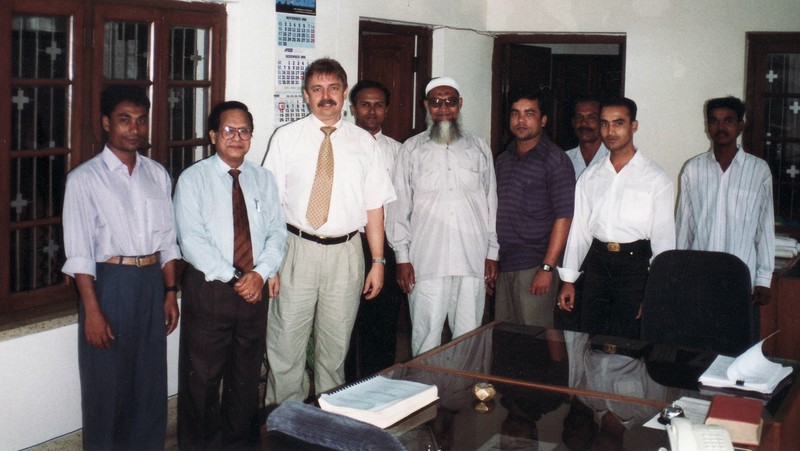
Md. Hafizur Rahman, Managing Director | KS Consultants Ltd., Dhaka, Bangladesh
Miguel Johnson | compacer GmbH

Listen to
A Birthday Song Like No Other
Created from moments of our birthday party in Hamburg in May 2026, this special song brings together guest sounds and excerpts from the tribute by Jeroen Eijsink, CEO of HHLA — turning the evening into a musical memory.
Timeline
HPC Through Time

1976 | Founding of HPC
HPC was established on 21 December 1976 as one of HHLA’s first subsidiaries at Container Terminal Burchardkai (CTB) in Hamburg.
From the start, HPC focused on turning terminal expertise into solutions for global logistics challenges.

1982 | Development of a port master plan and Asia Pacific market entry
The project included analyses of hinterland traffic, future cargo demand, and containerisation readiness, resulting in alternative port concepts, operational improvements, layouts, and long-term investment strategies.

1983 | HPC’s very first customer renewed and expanded its contract
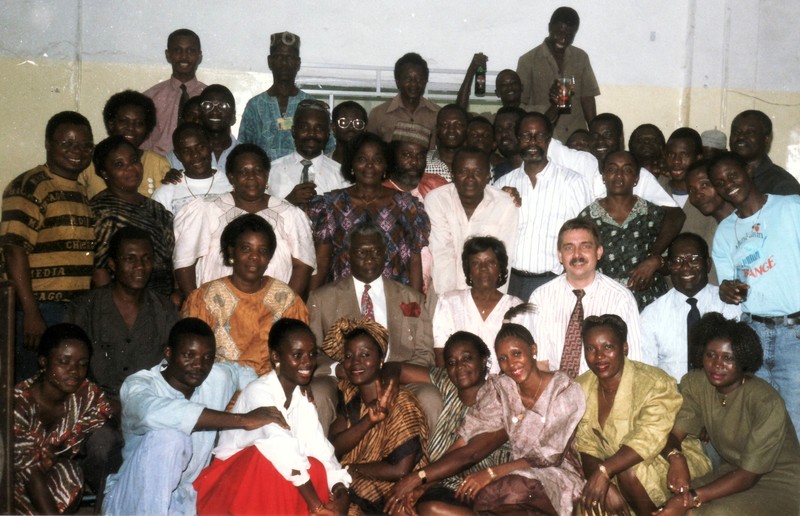
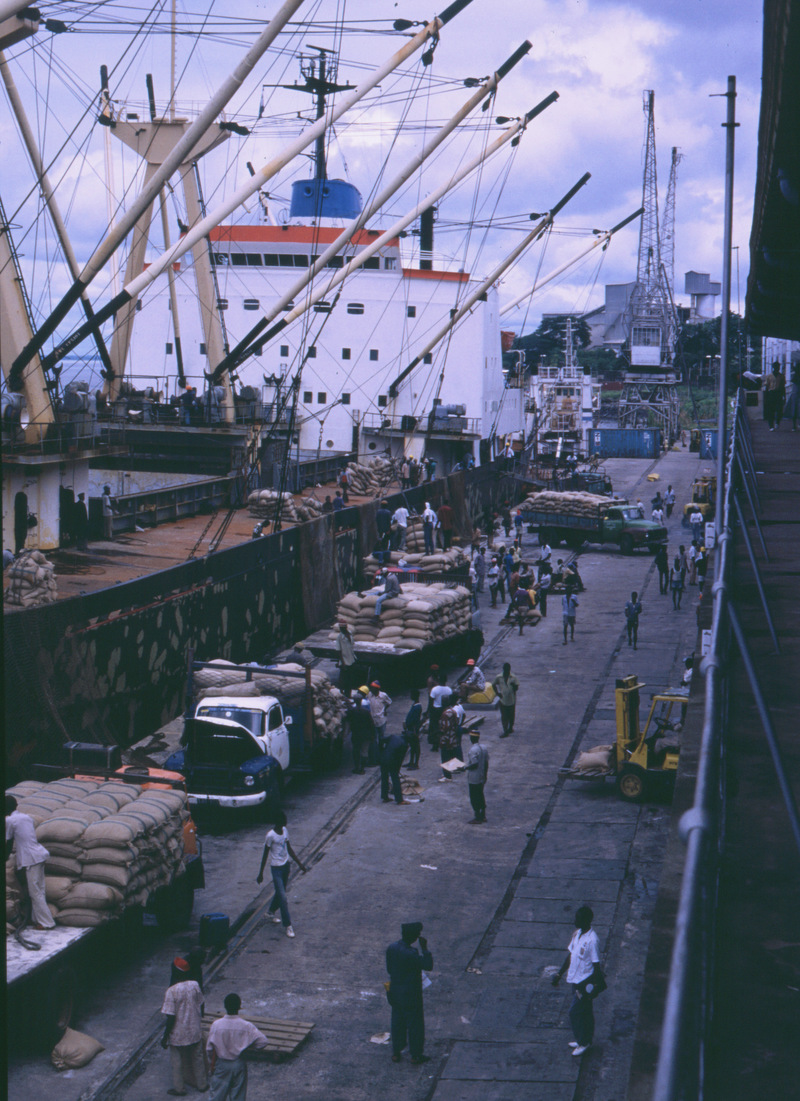
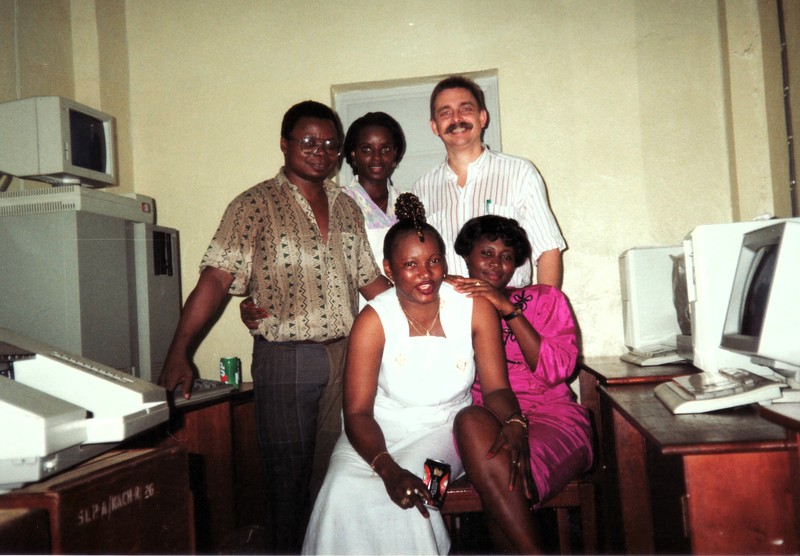
From 1977 to 1984, HPC supported the Nigerian Ports Authority through a long-term technical assistance programme across several ports, including Lagos, Port Harcourt, Calabar, and Warri. The project covered port operations, engineering, management, maintenance systems, and staff training, with up to 50 international experts working alongside local teams on site.

1984 | HPC and Saudi Arabian Seaports Authority start partnership
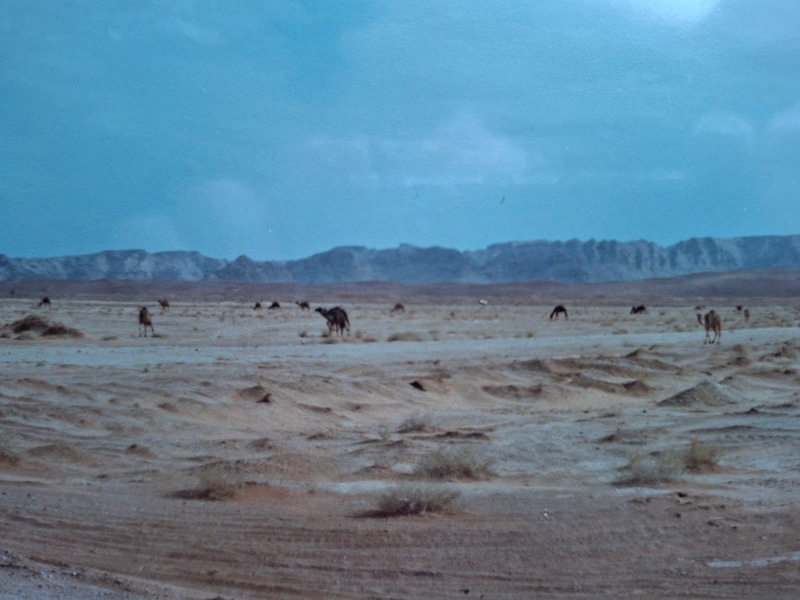
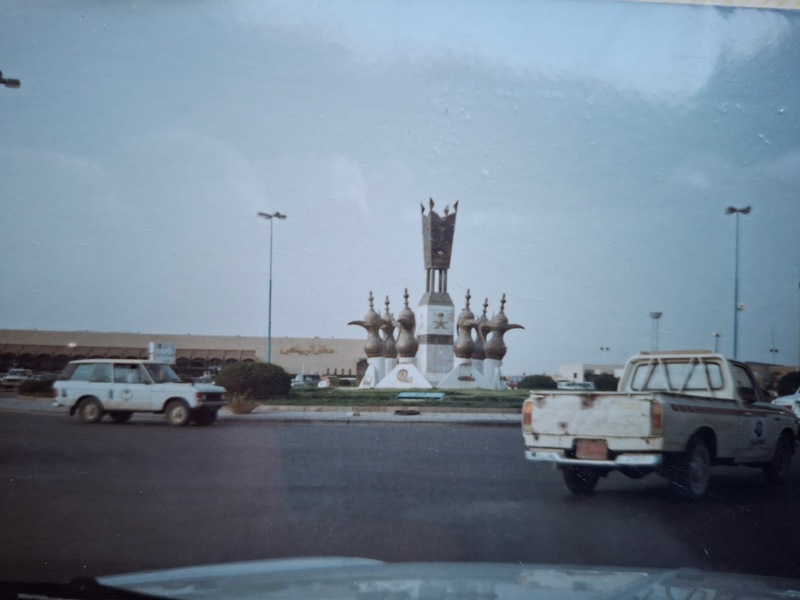
Since 1978, HPC has supported the Saudi Arabian Seaports Authority through strategic and operational consultancy services across ports including Jeddah, Dammam, Yanbu, Jubail, and Gizan. The long-term collaboration covered port regulations, tariffs, organisational structures, master planning, safety systems, marine traffic control, and environmental measures. Nearly five decades later, that relationship still stands.

1985 | Gunter Klatt becomes Managing Director
Gunter Klatt starts his role as managing director at HPC and with it a new chapter in projects and evolution.

1986 | HPC and Ghana Ports and Harbours Authority kick off their long-term collaboration
In 1985, HPC started its cooperation with the Ghana Ports and Harbours Authority in Tema and Takoradi through a rehabilitation project for timber sheds and port infrastructure. What began as a one-year engineering assignment developed into a long-term partnership, combining technical expertise with close intercultural collaboration.

1989 | HPC supports Turkish ports for containerisation
HPC supported Türkiye Denizcilik İşletmeleri in preparing several Turkish ports for containerisation, including Izmir, Mersin, Trabzon, and Haydarpaşa. The project included management consultancy, operational documentation systems, and practical training programmes delivered with support from interpreters and HPTI trainers in Hamburg.

1992 | Development of an automated EDP system for a storage facility
HPC developed an automated EDP system for storage and distribution processes under the ISETEC 303 programme. The project introduced digital coordination, cargo identification, and capacity-based planning to improve warehouse efficiency and reduce manual administration.

1999 | Customised CTIS for Santos, Brazil
In 1988, HPC developed a customised Container Terminal Information System (CTIS) for the privatised TECON Santos terminal in Brazil. The project integrated systems such as STOWMAN, CuBiS, and EDI connections with clients, customs, and authorities to digitalise and optimise terminal operations.

2000 | HPC starts management and operation of "HPC Ukraina" terminal
In 2000, HPC initiated the development of the container terminal “HPC Ukraina,” now HHLA Container Terminal Odessa (CTO), and acted as its initial operator.
HPC played a key role in establishing operations and IT systems, supporting the terminal’s long-term growth and efficiency.

2002 | First fully automated Terminal with Container Terminal Altenwerder (CTA)
HPC played a key role in planning and realizing Container Terminal Altenwerder (CTA) in Hamburg, one of the world’s first fully automated terminals.
This project highlights HPC’s expertise in delivering innovative, high-performance terminal solutions.

2009 | HPCs first simulation project for Port of Singapore Authority (PSA)
In 2009, HPC supported the Port of Singapore Authority (PSA) in planning Pasir Panjang Terminals 3 and 4. The project developed and simulated two automated and one conventional operating concept to evaluate traffic flows, capacities, system performance, safety, and cost efficiency before construction.

2010 | HPTI supports TPT in South Africa
HPTI supported TPT Transnet Port Terminals in South Africa with training for new RTG-operated container terminals and operational transitions from straddle carrier systems. The project included practical training in ship, yard, and rail planning, as well as instructor qualification for long-term internal training capacity.

2017 | Unified HPC brand
HPTI Hamburg Port Training Institute and UNICONSULT were integrated under the unified HPC brand, strengthening our market presence and enabled a more integrated approach to consulting and training services.

2021 | HPC strengthens leadership team with Nils Kemme
Dr Nils Kemme was appointed Managing Director of HPC Hamburg Port Consulting. Dr Nils Kemme brings together simulation expertise, strategic thinking and hands-on industry knowledge as Managing Director of HPC Hamburg Port Consulting. This perspective helps HPC develop practical, data-driven solutions for the global port and logistics industry.

2026 | Patrick Krawutschke joins management
A dual leadership is established within the HPC management team – Patrick Krawutschke joins Dr Nils Kemme as Managing Director.
This supports HPC’s continued strategic development and leadership in delivering innovative solutions.

First commercial barcode (UPC) scanner introduced at point of sale expands globally. Apple I and Cray-1 launched; early home and supercomputing.

Concorde begins regular commercial supersonic passenger service.
Beginning deregulation of freight transport encouraged competition, private investment, and more efficient international logistics systems.
Growing European trade integration increased demand for cross-border freight hubs and more efficient international transport corridors.
The late 1970s saw increasing adoption of container gantry cranes and mechanized terminal systems to improve cargo efficiency and turnaround times.
1978 First GPS (NAVSTAR) satellite launched, enabling global positioning and future data-intensive navigation systems. Oracle founded, advancing relational databases and large-scale data processing.
Late 1970s–1980s – Satellite communication (Inmarsat) allows distress calls, weather info and fleet communication far from shore.
Usenet launched as a decentralized global communication network, pioneering distributed data exchange.
DAKOSY was founded in Hamburg in 1982 as one of the world’s first data communication systems for ports.
GPS becomes available to civilians in 1983; full accuracy is released in 2000, enabling precise marine navigation and fleet tracking.
Electronic Data Interchange (EDI) standards (ANSI X12) established. ARPANET adopts TCP/IP marking the birth of the Internet.
Also advances in DNA sequencing begin data-intensive scientific computing.
Mobile workstations are linked to IT systems. At Hamburg's Burchardkai, HHLA is equipping its straddle carriers with small monitors. Drivers receive data on individual containers directly via radio transmission and send it back to keep the database up to date.
Introduction of Apple's Macintosh GUI.
FedEx introduces COSMOS II (real-time tracking system). Pioneers parcel tracking by computer; customers can trace shipments — introduces “track & trace” as industry norm. Also, Microsoft Windows 1.0 released.
Plaza Accord marks coordinated international economic policy action, highlighting growing global cooperation in managing complex financial systems.
Chernobyl nuclear disaster. Exposes environmental and political flaws in Soviet system; triggers anti-nuclear movements.
In the late 1980s private sector participation in ports started to become popular especially in South America, Africa, and South Asia.
World Wide Web invented (Tim Berners-Lee). Later enables global connectivity, online booking, and digital freight forwarding platforms.
Also, Fall of the Wall marking an symbolic end of the Cold War; globalization and liberal democracy surge.
Modern port community systems (PCS) emerge as shared electronic platforms connecting shipping lines, terminals, truckers, rail and customs, following Hamburg and Singapore as frontrunners.
Logistics shifts from B2B bulk to B2C parcels.
Internet commercialisation plus e-commerce pioneers. Amazon was founded. Creating new distribution models and expectations for home delivery.
Commercial Internet access booms. The Internet enters daily life; dot-com culture starts.
At Hamburg's HHLA operated Container Terminal Burchardkai a tracking system for van carriers is put into operation. The first worldwide. The straddle carriers and thus every container movement are tracked by combining the parallel DGPS and LADAR systems.
SAP launches Advanced Planner & Optimizer (APO). Marking the first integrated supply chain planning suite linking demand forecasts with logistics execution.
Euro was introduced as a virtual currency: an economic integration milestone; later in 2002 was the physical adoption.
AIS (Automatic Identification System) is rolled out. Real‑time vessel tracking improves collision avoidance, port planning and traffic management.
First GPS-enabled truck fleets become commercially viable. Leading to real-time vehicle location, improved dispatching and reduced idle time.
RFID standards (EPCglobal, ISO 18000) were finalized. Building the foundation for scalable tag-based supply chain visibility (especially in retail & defence).
Human Genome Project completed, marking a milestone in data-intensive science. Skype launched, enabling scalable real-time communication over the internet.
The first iPhone (smartphone) launched, impacting mobile logistics: handheld scanning, driver apps, live ETAs, last-mile optimization.
Global financial crisis: Deep recession. The trust in markets eroded and populism rose.
Cloud computing (AWS, Azure) became mainstream, which lowered the IT cost barrier; SaaS TMS/WMS solutions enabled small logistics providers to digitize operations.
Further, first mass‑production commercial electric cars (e.g., Tesla Roadster).
Beijing Olympics & global rise of China that signals China’s modern global power status.
Bitcoin created the blockchain concept.
Impact: Sparks exploration of distributed ledgers for shipment transparency and smart contracts.
Obama presidency begins. Symbol of post-racial hope; expands climate and digital diplomacy.
First IoT devices on containers, swap bodies and trailers stream location, temperature and shock data into cloud platforms.

Listen to
50 Years of HPC, Told Differently
What happens when 50 years of port consulting meet poetry slam? Listen to the performance from our birthday celebration in Hamburg.